
Florida Condos
Florida Condo Financing Changes 2026: What Buyers and Realtors Need to Know
Major Fannie Mae and Freddie Mac condominium-financing rules changed August 3, 2026. Learn what retired Limited Review, stricter reserve studies, and expanded small-project waivers mean for Florida buyers and realtors.
Published August 20, 2026
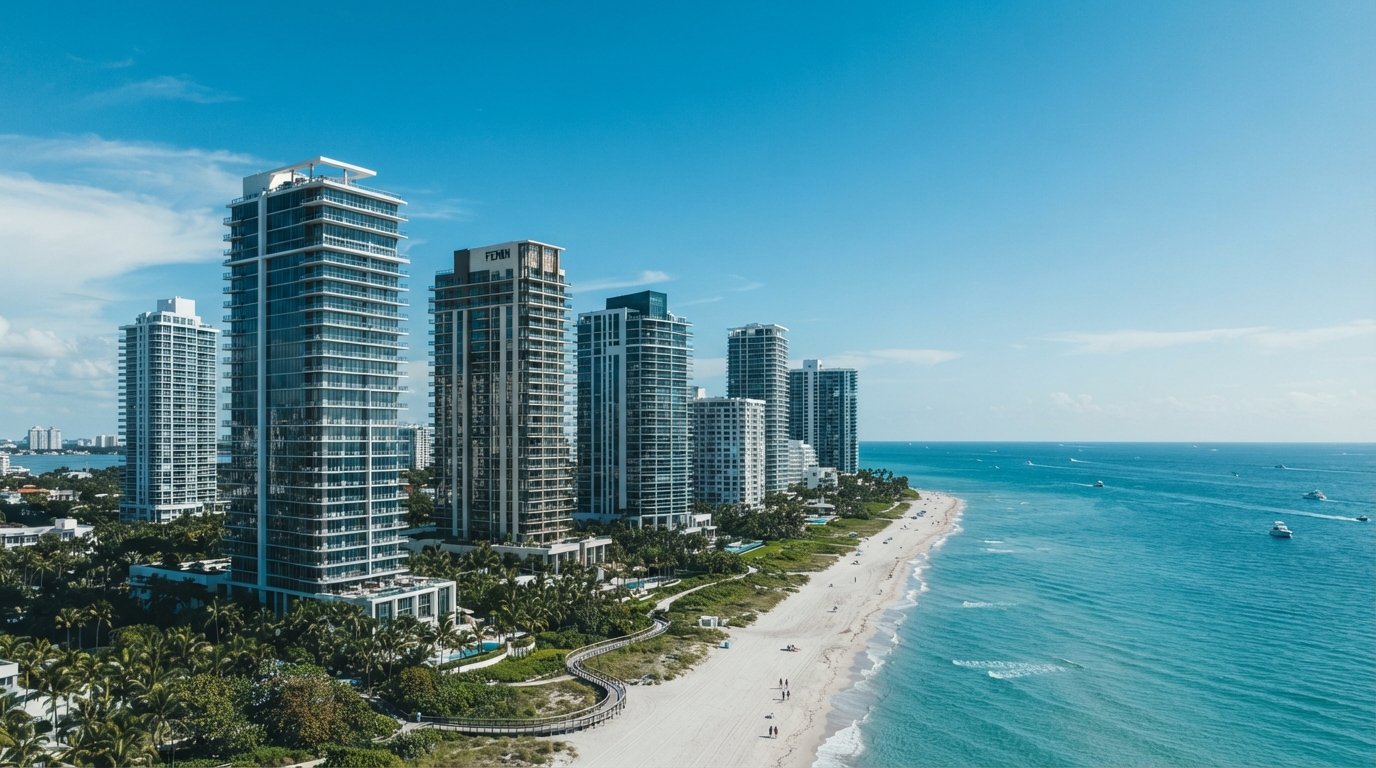
Major Fannie Mae and Freddie Mac condominium-financing rules changed for mortgage applications dated on or after August 3, 2026. Among the most important changes: Fannie Mae retired Limited Review, Freddie Mac retired Streamlined Review, project-review exemptions expanded for certain small condo projects, reserve-study requirements became stricter, and several Florida-specific restrictions disappeared. A separate increase in minimum replacement reserves from 10% to 15% does not take effect until January 4, 2027.
For condo buyers and real estate agents in Miami, Broward County and throughout Florida, that makes reviewing the condominium project itself early in the transaction more important than ever.
Why condo financing is different
When you purchase a single-family home, mortgage underwriting primarily focuses on the borrower and the property.
With a condominium, there is another layer: the condo project.
Depending on the loan and project, a lender may need to evaluate items such as the association's finances, reserves, insurance, special assessments, structural or critical repairs and other project-level eligibility requirements.
That means a buyer can be well-qualified personally while the condominium project creates a financing problem.
The rules governing that process changed substantially in 2026.
1. Fannie Mae Limited Review is gone
One of the biggest changes for Florida is the retirement of Fannie Mae's Limited Review process.
For applications dated on or after August 3, 2026, established projects that previously qualified for Limited Review generally must instead go through Fannie Mae's Full Review process unless the transaction qualifies for a Waiver of Project Review.
Fannie Mae specifically notes that retiring Limited Review also retires the remaining geographic restrictions that had applied to Florida under that process.
For buyers and Realtors, the terminology matters: asking whether a condominium "passes limited review" is no longer the right question for a new application subject to the updated rules.
2. Freddie Mac also retired Streamlined Review
Freddie Mac made a parallel change.
For mortgages with application received dates on or after August 3, 2026, Freddie Mac retired its Streamlined Review project-review type. Established condo projects instead use its current established-project review framework, reciprocal review when applicable, or may potentially be delivered as Exempt From Review when eligible.
This is especially important in Florida because older advice about Florida Streamlined Review LTV restrictions may still appear in online articles and training material.
Freddie Mac's current FAQ specifically distinguishes Florida mortgages with application dates before August 3, 2026 when discussing those former Streamlined Review restrictions.
3. Small condo projects may actually get an easier path
Not every 2026 change makes condo financing harder.
Fannie Mae expanded eligibility for its Waiver of Project Review to new and established projects containing ten or fewer units.
For five-to-ten-unit projects, the project cannot be part of a master association or larger development to use this particular option, and other applicable requirements still have to be satisfied.
This could be especially relevant to buyers looking at smaller boutique condominium buildings throughout South Florida.
A small building is not automatically financeable, but the expanded waiver creates another path worth evaluating before assuming a project requires a traditional Full Review.
4. Florida new-construction condos received another important change
Historically, Fannie Mae required new or newly converted Florida condo projects with attached units to be submitted through its Project Eligibility Review Service, commonly called PERS.
That Florida-specific requirement has been retired.
Fannie Mae says these projects may now be evaluated using the lender-delegated Full Review process, similar to other new attached condo projects.
For developers, buyers and agents working with new Florida condominium projects, this is a meaningful procedural change.
It does not mean that new projects automatically qualify. It changes the available review path.
5. Investor concentration limits changed
Fannie Mae also retired its 50% investment-property concentration limit for established projects reviewed under Full Review for investor loans.
However, this should not be interpreted as "investor concentration no longer matters anywhere."
Fannie Mae specifically notes that its presale requirement for certain new projects remains applicable.
For South Florida markets with significant second-home and investor ownership, this distinction can matter.
6. Reserve-study requirements became stricter
This is one of the changes I would pay particular attention to.
When a lender relies on a reserve study because a project's budget does not otherwise provide the required replacement-reserve allocation, Fannie Mae now requires the budget to include the highest recommended reserve allocation contained in the study.
The baseline funding method—where reserves can approach zero without becoming negative—can no longer be used for this purpose for applications subject to the new requirements.
Freddie Mac adopted a similar approach: when a reserve study is used as an exception, the highest applicable recommendation must be used, and baseline funding cannot establish adequacy for applications received on or after August 3, 2026.
For associations, this makes the quality and conclusions of the reserve study increasingly important.
7. The reserve requirement is NOT 15% yet
This deserves its own section because it is easy to misunderstand.
The current minimum replacement-reserve allocation under the applicable budget test remains 10% in 2026.
Fannie Mae and Freddie Mac have announced that the minimum will rise from 10% to 15% of annual budgeted assessment income, but the effective date is:
January 4, 2027.
So an article saying "Fannie Mae now requires every condo to have 15% reserves as of August 2026" would be inaccurate.
There is also an important nuance: a qualifying reserve study can provide an alternative path to the standard percentage-based budget requirement, subject to the agencies' conditions. Freddie Mac's current guide, for example, states that a seller may rely on a qualifying reserve study instead of the project budget providing at least a 10% replacement reserve.
8. Condo insurance remains part of the equation
Project insurance continues to be an important component of condominium eligibility.
Fannie Mae's 2026 updates changed several property-insurance requirements. Among other changes, the agency revised how lenders can document sufficient master-policy coverage and removed the requirement that roofs specifically be insured on a replacement-cost basis, although roofs still must be insured.
The current Fannie Mae Selling Guide maintains dedicated requirements for master property insurance covering project developments.
In Florida, where condominium associations can face significant insurance costs, insurance should be reviewed early rather than several days before closing.
What I recommend buyers do before making a condo offer
One of the biggest mistakes I see in condo transactions is waiting until late in the mortgage process to investigate the association.
For a Florida condo purchase, I recommend having your lender review the project as early as practical.
Useful documentation may include the association budget, insurance information, condo questionnaire, information about current or planned special assessments, reserve study when applicable, and information regarding significant repairs or structural issues.
The exact documentation depends on the project and loan program.
A preapproval tells us whether the borrower appears qualified. Condo-project review helps determine whether the building is eligible for the particular financing being requested.
Those are two different questions.
What Florida Realtors should do differently
If you represent condo buyers, consider making the condo-project financing discussion part of the property-selection process, not merely the closing process.
Before your client becomes heavily invested in a particular property, ask:
- Has this project recently been successfully financed with conventional mortgages?
- Are there current or planned special assessments?
- Are significant repairs underway?
- Does the association have a recent reserve study?
- Is the master insurance policy readily available?
- Can the association or management company respond quickly to lender questionnaires?
None of these questions alone determines eligibility, but the answers can identify potential financing friction much earlier.
What this means for South Florida
The changes are particularly relevant in Miami-Dade, Broward and Palm Beach counties because condominium ownership is such a large part of the housing market.
They don't mean that condo financing is disappearing.
They mean the project should be reviewed strategically and early.
Some changes actually provide additional flexibility, including expanded review waivers for qualifying smaller projects and removal of certain Florida-specific review restrictions.
Others put more emphasis on financial sustainability, reserve studies and project condition.
The important part is knowing which rules apply to the specific building, loan program and application date.
The takeaway
The August 2026 condo changes are not simply a story about "tighter condo rules."
Some requirements became more rigorous, while other restrictions were removed or simplified.
For Florida buyers, the best strategy is straightforward:
Get the borrower qualified and investigate the condominium project early.
That can help identify financing problems while there is still time to evaluate options instead of discovering them just before closing.
Mortgage guidelines and project eligibility can change and may vary by lender and transaction. This article is educational and is not a commitment to lend or a guarantee that a particular condominium project or borrower will qualify.
Frequently Asked Questions
Did Fannie Mae eliminate Limited Review for condos?▾
Yes. For loan applications dated on or after August 3, 2026, Fannie Mae retired Limited Review. Eligible transactions may instead use Full Review or a Waiver of Project Review where the requirements are satisfied.
Does Freddie Mac still allow Streamlined Review in Florida?▾
Not for new applications subject to the August 3, 2026 change. Freddie Mac retired Streamlined Review and moved established projects to its updated review framework, with other options such as Exempt From Review available when applicable.
Do Florida condos need 15% reserves now?▾
No. The announced increase from a 10% minimum to 15% takes effect for applicable applications beginning January 4, 2027, not August 2026.
Can a condo with less than the standard reserve allocation still qualify?▾
Potentially. Agency guidelines provide paths involving qualifying reserve studies, but the reserve study and project must meet specific requirements. Eligibility should be evaluated on the actual project rather than assumed from one budget percentage.
Are small Florida condo buildings easier to finance now?▾
Some may have a more flexible review path. Fannie Mae expanded Waiver of Project Review eligibility to certain projects with ten or fewer units, subject to additional requirements.
Can I determine whether a condo qualifies before making an offer?▾
A lender can often perform meaningful preliminary project due diligence before or early in the transaction. Final eligibility depends on the applicable loan, project documentation and lender/agency requirements.
Authoritative Sources
This is not a commitment to lend. All loans are subject to credit approval, property approval, program guidelines, and applicable terms. Programs, rates, terms, and conditions are subject to change without notice. Not all applicants will qualify. Equal Housing Opportunity.
Angel Taipale, NMLS #1736690 — Bright Horizon Lending Inc., NMLS #2565670. Verify on NMLS Consumer Access